Reduce repeat filming
Turn scripts into character-led videos without putting the same person on camera every time. This is useful for creators, educators, and small teams that need frequent output.
LPM 1.0 helps teams turn scripts, recordings, and ideas into reusable on-screen characters. It is best suited for explainers, product videos, podcast visuals, and other repeatable content workflows where character consistency matters more than strict real-time interaction.
Access Updates Coming Soon
No public product or API access is offered through this page today.
Research-backed summary page. Evidence notes and access details are listed below.
The value is not only that a character can move or speak. The real value is replacing repeated on-camera explanation with a consistent character layer that can be reused across tutorials, product communication, and recurring content.
Continue to Core Capabilities to see how controllable delivery fits repeatable production.
Turn scripts into character-led videos without putting the same person on camera every time. This is useful for creators, educators, and small teams that need frequent output.
A visible speaking character adds guidance and structure to screen recordings, demos, and how-to content. This helps information feel clearer and more human than slides or subtitles alone.
A repeatable character gives channels, brands, and series content a recognizable identity across multiple videos instead of starting from scratch each time.
LPM is most useful when a team needs controllable character delivery in a repeatable workflow. The point is not novelty alone, but a reusable presentation layer for tutorials, explainers, demos, and content series.
See Best-Fit Content Workflows for where these controls matter most.
Use text, reference visuals, and performance cues to shape how a character speaks, behaves, and presents information. The goal is controllable delivery, not one-off novelty.
A character does not need to own the whole frame. LPM fits mixed formats like talking-head plus screen recording, product close-ups, or step-by-step demonstrations.
Consistency matters when the same persona appears in recurring videos, explainers, and series formats. Stable identity makes the output more reusable for ongoing content operations.
The strongest fit is not every avatar scenario. It is repeatable content work where a speaking character improves clarity, consistency, and production efficiency without requiring a human presenter in every recording.
If this matches your workflow, follow the access updates section for future availability notes.
Add a speaking character to software walkthroughs, AI tool tutorials, and process explainers so the content feels guided rather than purely technical.
Use a repeatable character to explain offers, features, onboarding steps, FAQs, and landing page messaging without filming a human presenter every time.
Turn scripts, outlines, or audio-led formats into visual conversations for interviews, roundtables, commentary, and educational discussion content.
LPM creates the most value when teams need consistency across repeated communication. That makes tutorials, demos, FAQs, onboarding, and scripted interaction a stronger fit than demanding live-response scenarios.
Review Evidence Snapshot for research-backed context behind these fit signals.
If your workflow is scripted or repeatable, consistency and clarity matter more than instant reaction speed. That is where character-led video becomes more practical.
LPM is better aligned with FAQ videos, reply-style videos, guided conversations, and other formats that feel interactive without requiring hard real-time performance.
The strongest value comes from turning repeated explanation into reusable character output across channels, campaigns, onboarding flows, and content series.
Fit and consistency statements on this page are research-backed directional signals, not guaranteed product outcomes.
Use this section to check where LPM matches large, repeatable demand. The strongest opportunities are not niche avatar experiments, but recurring content and communication tasks that normally require someone to explain the same thing on camera again and again.
If these use cases match your roadmap, use the access updates section to follow future availability notes.
For creators who want a stable on-screen identity for commentary, education, stories, reviews, and channel content without filming every video themselves.
For teams that need repeatable product videos, service introductions, FAQ answers, promotion, and onboarding content with a consistent spokesperson style.
For personalized video replies, audience Q&A, learning practice, light companion experiences, and other interaction formats that do not require strict real-time response.
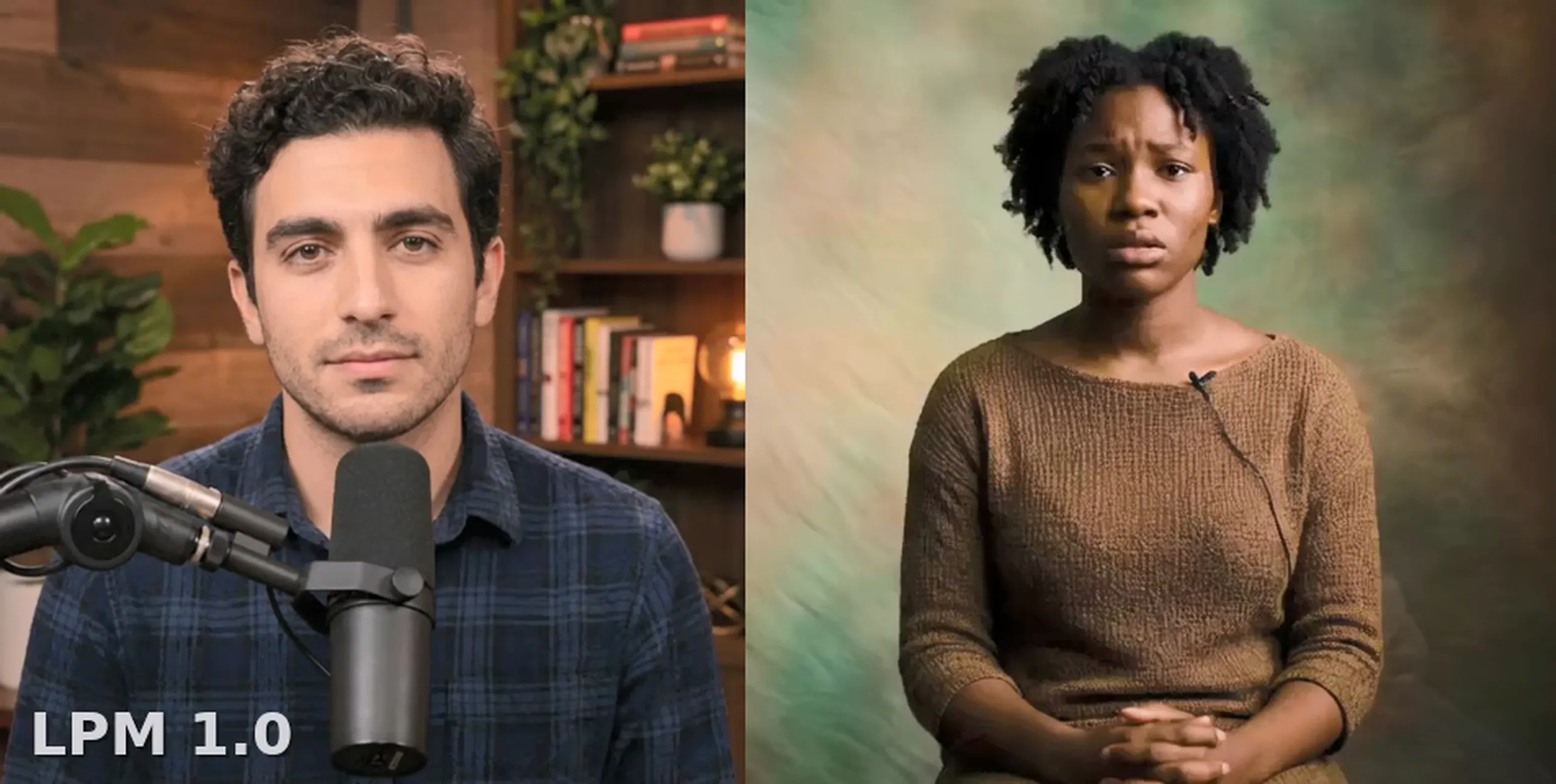
Preview representative outputs across explainers, creator formats, consistency control, and interaction-style examples.
Brand Explainer
Scripted explainer delivery for product education and guided communication.
 Open Full Video
Creator Content
Full-length showcase opens in a new tab to keep this page lightweight.
Production Workflow
Repeatable behavior and stable voice continuity across multiple characters.
 Open Full Video
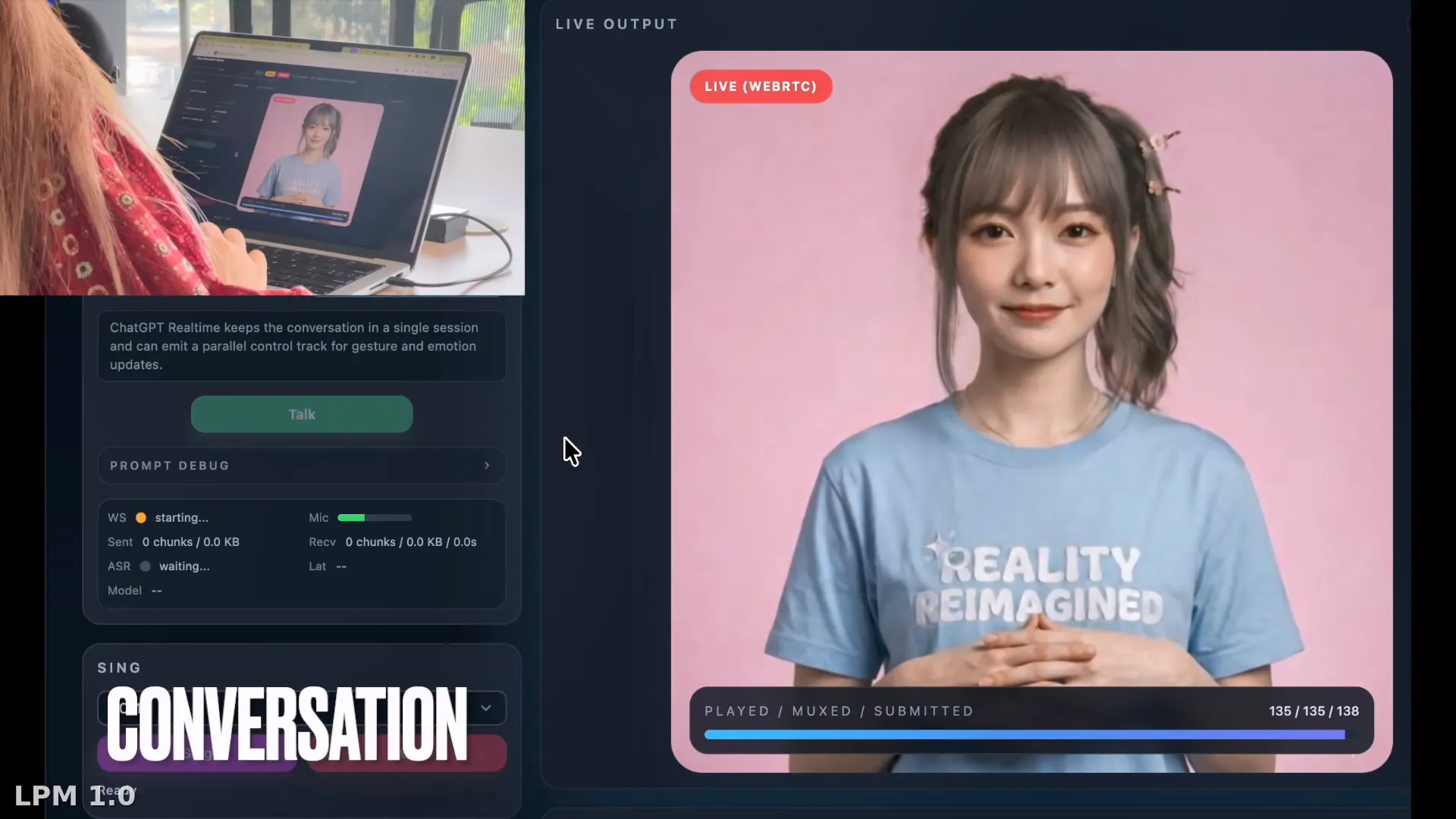
Interactive Format
Longer interaction example opens in a new tab for better in-page performance.
Entertainment Format
Expands the range of character style, pacing, and expressive output.
Control Precision
Demonstrates prompt-driven motion control with consistent character identity.
These use cases describe where LPM is commercially strongest today: repeatable, script-driven, and asynchronous character communication.
Research-backed signals, benchmark context, and access outlook are summarized here so teams can evaluate workflow fit without mistaking research data for product availability.
LPM 1.0 research describes a 17B base model and reports both long-horizon generation context and approximately 700ms end-to-end latency in Online LPM experiments. These figures are research-reported evidence, not service-level commitments on this page.
The LPM-Bench summary reports 1,000 test cases spanning 22 base expressions, 78 emotional states, and 5,000+ actions. This supports evaluation depth, not a promise of product coverage for every scenario.
Research materials describe invisible watermarking, C2PA provenance signatures, and moderation mechanisms as safety-oriented components in the reported system context.
There is no public product or API access through this page today. Follow this page for future availability updates if official access or service integration paths open later.
Numbers on this page are summarized from the LPM 1.0 Technical Report and should be read as research-reported evidence, not product availability or SLA commitments.
This FAQ clarifies workflow fit, access status, and evidence scope so readers do not have to infer positioning from button text alone.
For access status, always follow the wording in Evidence Snapshot and Final CTA.
LPM 1.0 is best suited for repeatable character-led communication such as tutorials, product demos, podcast visuals, explainers, and other script-driven workflows where a reusable on-screen persona is valuable.
This page positions LPM 1.0 more strongly for repeatable character videos than for demanding live-hosting scenarios. Consistency, script control, and asynchronous delivery are the clearer fit here.
Yes. Those are the primary scenarios highlighted on this page because a speaking character can add guidance, continuity, and production efficiency across recurring formats.
No. This page does not provide public product access, public demo access, or public API access today.
It is a placeholder call to watch this page for future availability updates. It should not be read as a live public signup flow, immediate access channel, or public API request form.
Evidence is summarized from the LPM 1.0 Technical Report and official project materials, including research-reported model, latency, benchmark, and safety/provenance context.
It covers the research context, data and model design, benchmark setup, and safety/provenance discussion. It is a supporting evidence source, not a product access document.
FAQ answers follow the same access boundary used across Hero, Evidence Snapshot, and Final CTA.
If repeatable character video fits your roadmap, follow access updates while we keep this page aligned with research-backed evidence and transparent boundaries.
Follow Access UpdatesAccess Updates Coming Soon
No public access is offered on this page today. Future availability updates will be posted here.
Numbers on this page are summarized from the LPM 1.0 Technical Report and should be read as research-reported evidence, not product availability or SLA commitments.
Updated: 2026-04-12